

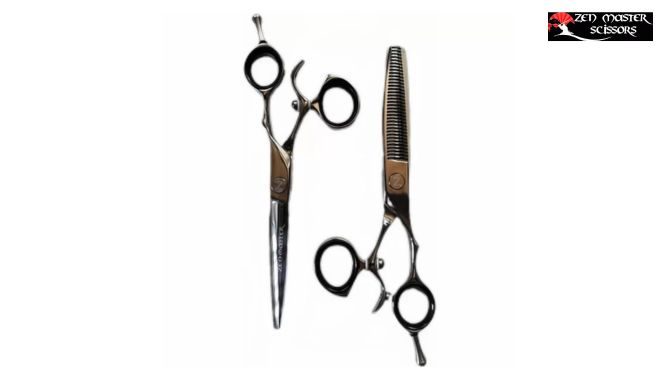
If you’re left-handed, you’ve probably heard it before. “Don’t worry, you’ll get used to right-handed scissors.”
To be fair — somehow, many stylists do.
Walk into enough salons, and you’ll find left-handed professionals cutting perfectly good hair with tools designed for right-handed users. Some do it for many years.
The question isn’t whether it’s possible. The question is whether it’s ideal.
That’s where the conversation gets interesting.
The Biggest Difference Is Not What You Think
Most people look at the handles first — but the real difference lies in the blades.
On right-handed hairdressing scissors, the right blade sits on top. On left-handed scissors, that arrangement is reversed. It sounds like a small detail. In practice, it changes how the scissors cut and how clearly you can see your cutting line.
Many left-handed stylists don’t realise this until they try a genuine left-handed pair for the first time.
Suddenly, the line they’re cutting feels easier to follow. Sections feel cleaner. Visibility improves.
Not dramatically. Just enough to make them wonder why nobody explained it sooner!
Why Some Left-Handed Stylists Struggle With Right-Handed Scissors
Here’s something that often gets overlooked.
Scissors aren’t designed to simply open and close. They’re designed to create pressure between the blades while cutting.
A right-handed user naturally applies that pressure in a way that keeps the blades working together. A left-handed user often has to compensate. That’s why some stylists experience folding, pushing, or bending of the hair rather than a clean cut.
The issue isn’t necessarily the quality of the scissors. It’s that the tool wasn’t built around the way their hand moves.
“But I’ve Used Right-Handed Scissors My Whole Career”
Many left-handed stylists say that — and they’re not wrong.
Humans are remarkably good at adapting. Some lefty barbers have spent decades using right-handed barber scissors without any major complaints. They’ve adjusted their grip. Changed their hand position. Learned to work around the limitations.
The real question is whether those adjustments should have been necessary in the first place.
When a tool fits properly, you generally spend less time compensating and more time focusing on the haircut itself.
It’s Not Just About Comfort
Comfort is often mentioned when discussing left-handed scissors.
Precision deserves equal attention.
When visibility improves and blade action feels more natural, detailed work often becomes easier. That can be particularly noticeable during scissor-over-comb work, precision cutting, or technical shapes where every line matters.
Small improvements add up over hundreds of clients. That’s usually where professionals begin noticing the difference.
Should Every Left-Handed Stylist Buy Left-Handed Scissors?
Some prefer what they’ve always used. Others switch — and immediately wonder how they managed without them.
The important thing is understanding that true left-handed scissors aren’t simply a mirror image sold for marketing purposes. They are built differently and function differently.
Once you understand that, making an informed decision becomes easier.
Conclusion
The debate between left-handed and right-handed hairdressing scissors isn’t really about preference — it’s about fit.
The best scissors are the ones that allow you to cut naturally, comfortably, and confidently. For left-handed barbers, that may mean exploring hair scissors designed specifically for the way they work.
As more suppliers expand their range, finding those options has become much easier than it once was.
Suppliers like Zen Master Scissors offer dedicated left-handed and right-handed models, giving stylists and barbers the opportunity to choose tools based on performance rather than availability.